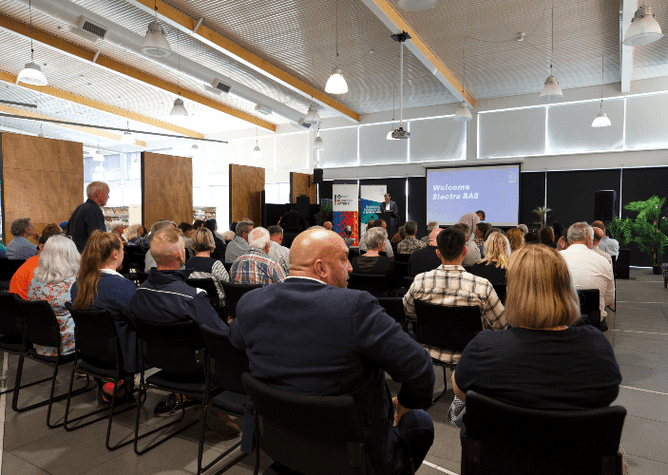
Electra BA5 December Event
Tuesday, 2 December 2025, Te Takeretanga o Kura-hau-po, Levin
Guest Speaker: Brad Olsen, Chief Executive and Principal Economist, Infometrics
Brad Olsen returned to the Electra BA5 with an anticipated update on New Zealand's economic conditions. His presentation blended realism with cautious optimism as the country continues to adjust to ongoing economic uncertainty.
8 Key takeaways were:
1. The Search for a New Economic Normal
Brad noted that although the economy is still under pressure, the first signs of recovery are beginning to appear. However, Aotearoa is still working out what normal looks like after the pandemic, the inflation spike, supply chain shocks, and rapid cost changes.
Key points included:
Conditions before 2020 are no longer a reliable benchmark due to structural shifts.
The overheated period of 2021 and 2022 is not sustainable.
The correction phase of 2023 and 2024, marked by high interest rates and subdued activity, is still unwinding.
2. Interest Rates Enter a New Phase
Brad highlighted last week's reduction in the Official Cash Rate (OCR) to 2.25 percent. This marks a shift from tight restraint toward direct stimulus.
The OCR is now easing but remains above the emergency settings of 2020.
Infometrics expects rates may lift slightly in late 2026 to return to a neutral level of around 3 to 3.5 percent.
Monetary policy impacts take 12 months or more to fully work through households and businesses.
3. Confidence Still Fragile
Household sentiment has fluctuated during 2025.
Many households say current conditions are difficult.
Optimism early in the year has fallen as concerns about job security and costs remain.
Even with lower mortgage rates, many people are reluctant to increase spending.
4. Primary Sector Remains a Key Strength
Despite global trade disruptions, the primary sector continues to anchor both the national and local economy.
Global milk supply has increased, easing earlier shortages.
Farmer incomes are stabilising.
Dairy, meat, and horticulture prices remain at healthy levels even if not booming.
5. Local Conditions Are Mixed
Horowhenua reflects the uneven national picture.
Some industries are busy while others face slow weeks or limited forward contracts.
The chance of someone unemployed moving into work in a three month period is at its lowest in 30 years.
Spending activity remains subdued as households prioritise essentials.
6. Housing, Construction, and Population Trends
Residential consents in Horowhenua have dropped 21 percent over the last year.
This follows several years of strong building activity from 2016 through to 2024.
Population growth is slowing and now relies heavily on migration.
The district retains a relative affordability advantage compared with Wellington and the national average.
7. Infrastructure Costs and Climate Pressures
Local government faces rising costs.
Bridge construction costs are up more than 40 percent in recent years.
Extreme weather is more frequent, increasing strain on infrastructure budgets.
8. Inflation Outlook
Inflation has re-accelerated to 3 percent.
Core inflation is flattening, suggesting underlying stabilisation.
Infometrics expects inflation to continue easing although risks remain.
Brad ended by reinforcing that while the path ahead is demanding, the direction is slowly improving. Horowhenua is positioned to benefit as confidence returns.
Read our districts performance here: